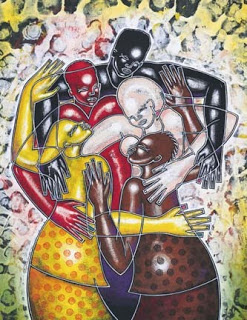
“Every day we slaughter our finest impulses. That is why we get heartache when we read those lines written by the hand of a master and recognize them as our own, as the tender shoots which we stifled because we lacked the faith to believe in our own powers, our own criterion of truth and beauty….We all derive from the same source. There is no mystery about the origin of things. We are all part of creation, all kings, all poets, all musicians; we have only to open up, only to discover what is already there.” Henry Miller
Every day we slaughter our finest impulses
Free writing and morning pages ala Julia Cameron
Free writing rules
- Make sure you won’t be interrupted
- Decide how much or how long you will write (e.g. 3 pages or 10 mins)
- Keep your hand moving.
- Don’t pause to reread.
- Don’t cross out.
- Don’t worry about spelling, punctuation and grammar.
- Don’t think. Don’t get logical.
- Write only for yourself.
- Go for the jugular.
From The Artists Way by Julia Cameron
“Put simply, the morning pages are three pages of longhand writing, strictly stream-of-consciousness: “Oh, god, another morning. I have NOTHING to say. I need to wash the curtains. Did I get my laundry yesterday? Blah, blah, blah….” There is no wrong way to do morning pages. Pages are meant to be, simply, the act of moving the hand across the page and writing down whatever comes to mind. Nothing is too petty, too silly, too stupid, or too weird to be included. The morning pages are not supposed to sound smart – although sometimes they might. Most times they won’t and nobody will ever know except you. Nobody is allowed to read your morning pages except you. And you shouldn’t even read them yourself for the first eight weeks or so. Just write three pages. Morning pages are non-negotiable. Never skip or skimp on morning pages. Your mood doesn’t matter. Three pages of whatever crosses your mind – that’s all there is to it. If you can’t think of anything to write, then write, “I can’t think of anything to write…” do this until you have filled three pages. Do anything until you have filled three pages. Anyone who faithfully writes morning pages will be led to a connection with a source of wisdom within.”
Hambe Kahle Nelson Mandela

I am sad for the passing of a truly great man: an African Gentleman, Freedom Fighter and Statesman. He was as delighted to meet me as he was every person he met. I felt included in his world of justice and grace. I felt I belonged there with him and simultaneously my own integrity was called and valued. In Mandela was a backbone so straight, an unshakehable and clear understanding of the right thing to do. Today I saw the sun rising without Mandela’s living spirt upon the Earth. But it still feels close, calling us all to his brand of leadership where we affirm the worth and belonging of every person we meet, and we take a stand again and again and again, on what will be good for our common humanity.

My work is to create clarity and allow for magic to happen.
Creating clarity is detangling and de-cluttering until we can see what is actually there. The tools of clarity are noticing, truth telling, choosing and letting go. Clarity gives us the distilled essence of something.
There is something out of the expected and the ordinary that wants to be revealed which I call magic. This cannot be grasped through demand or the effort to control. The process toward magic is through holding a space and allowing for it to come. The practice is of trust and presence, of centering and flow.
TCC Developmentors at work
The Coaching Center holds such a special supervision space led by Paddy Paisley. Us coaches or “developmentors” get deep learning and develop our capacity to hold others so they get the transformation and growth they are yearning for.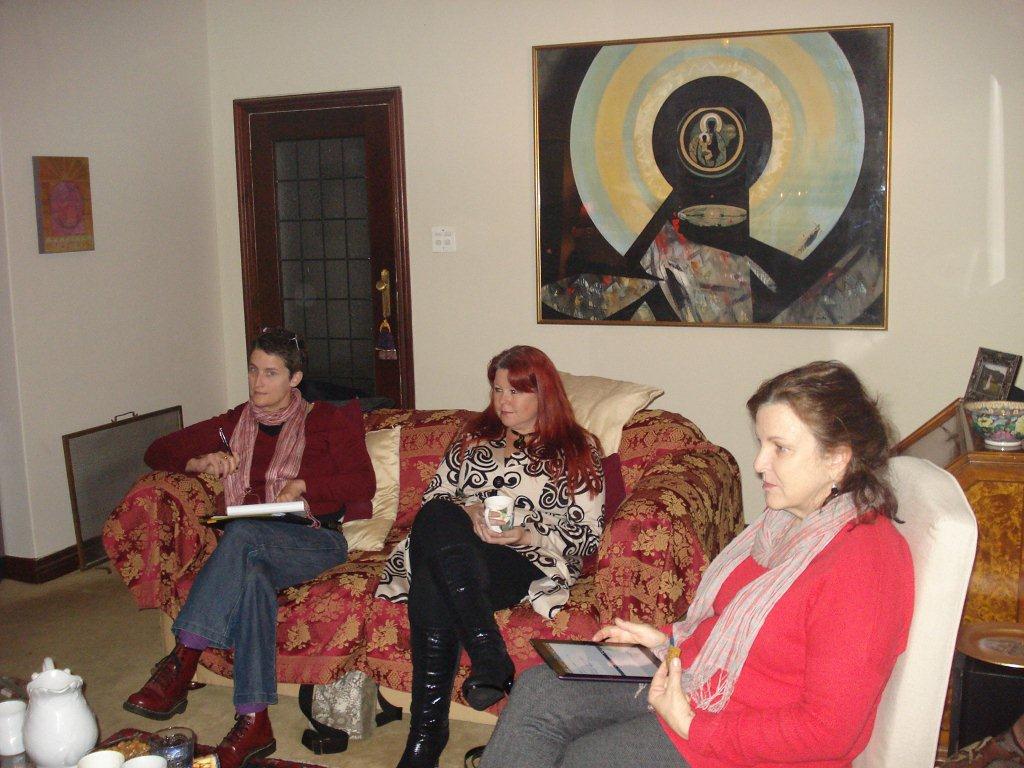
High self mastery – the Four
At first, when learning about the Enneagram, there is the “eek” when we see so clearly how we have limited ourselves. Then there is the fabulous realisation too that we have natural strengths which we only have to allow to shine.
The four, who at low levels of self mastery is the emotionally tormented person “depressed and alientated from themselves and others,” at high levels becomes the inspired creator.
What type do you resonate with? What is the highest mastery that is so within your grasp? The “high level” of self mastery for the four is described in Riso and Hudson’s “Personality Types.”
First they write that: “Creativity can be maintained only in the act itself, by continuing to transcend self-consicousness. It requires a constant renewing of the self with each moment.” Fours at high self mastery:
– are like oysters, transforming all their experiences, even painful ones, into something beautiful
– draw inspiration from the widest varitey of sources, filtering the raw material of experience through the unconsious
– conduits through which the sublime passes into the world
– express the personal universally in something that has resonance and meaning beyond what they intend when they create
– create and discover themselves in what they bring into the world
– sensitive to themselves and others because they are inituitive.
“Intuition is not some sort of useless sideshow telepathy but a means of perceiving reality by way of the unconscious. It is like receiving a message in a bottle which has washed up on the shore of consiousness.”
“I note the echo that each thing produces as it strikes my soul” -Stendhal.
Running
If we push on, running harder, deeper into the loneliness, further away from the world and the structure of our lives, we begin to feel strangely elated, detached yet at the same time connected, connected to ourselves. With nothing but our own two legs moving us, we begin to get a vauge, tingling sense of who, or what, we really are.
Waking up
Wisdom teaching about waking up: when we are able to notice what we are doing now, to experience our current state completely and without judgment, the old patterns will begin to fall away.
The Wisdom of the Enneagram
Yoga
Yoga gives you a way to create inner sanctuary: a safe haven that cradles you and gives you strength when you need it most.
Why bother understanding personality types?
Why bother with having an understanding of personality types?
On a basic level, when we are aware of ourselves, and this includes our personality, we get to choose our responses rather than get stuck in our habitual reactions. Ginger Lapid-Bogna, pioneer in using the Enneagram personality typology in organisations, says that understanding of the Enneagram helps us to understand, accept, and manage ourselves, but more than this – it also enhances our capacity to work effectively with a wide variety of other people.
What is key is to understand not just our own type, but our own type in relation to other types. It’s as if our personality is like a pair of coloured glasses we are wearing but we have no idea we are wearing them. Becoming aware of the type we orientate from is like scratching the glass: Suddenly we are aware that we are viewing the world from a particular perspective. Being exposed to other personality types is to become aware of a whole host of different ways of viewing the world. Understanding the different typologies helps with relationships since a huge source of conflict is people operating out of different typological orientations. Recognising that someone is of another type can help to depersonalise the way they respond to us, help us to understand their behaviour, and ease the pressure in a relationship.
On a deeper level, understanding our type can lead us to a fuller expression of ourselves and guide us toward accessing those parts of ourselves we have downplayed or denied in some way. Writes Jungian analyst James Hollis: “Part of the inner distress originates from the fact that we, and our society, have colluded in neglecting the whole person. We have coasted on what was easy for us; we were rewarded for productivity not wholeness. In our dreams we live out the other side of the personality, for the inferior function is the trapdoor to the unconscious.”